Meet the Author: Cynthia Robinson

Cynthia Robinson was born in Tennessee, has lived and traveled extensively abroad, and holds a Ph.D. in Art History from the University of Pennsylvania. She is Professor of Islamic and Medieval Art History at Cornell University. The Will of Venus is her debut novel.
When did you start writing professionally?

I have written fiction off and on throughout my life, but have always had “day jobs” -- anything from bartending and catering to my now quite serious academic career. I am a professor of Medieval and Islamic Art History, and have published widely for an academic audience (which is what you have to do if you want to get tenure and then a full professorship). Especially during the tenure process, academia can be all-consuming, so I had actually parked the fiction thing for a number of years until relatively recently. 

The Will of Venus is my first published novel, but I have one other novel finished. It has been submitted to a small, independent press; we’ll see what happens there. I have recently written my first short-short story, and have begun to send out excerpts and chapters to contests and journals. I also plan to begin a methodical and serious search for a literary agent (Venus happened without one) during the next few months, so we’ll see where this all goes. One thing is certain, however: now that I have started writing again, I don’t think I’ll stop anytime soon!

Why do you write women's fiction?

At first glance, Venus definitely looks to most people like Chick Lit, and most of the sites that have featured or reviewed it are Chick Lit sites. That doesn’t bother me at all—I am delighted for anyone to read or review it. At the most basic level, the interchange between author and reader/reviewer is an investment of the reader’s or the reviewer’s time, attention and energy, and I am appreciative of the investment any reader or reviewer dedicates to my work.

I wouldn’t say, though, that I necessarily set out to craft stories for an exclusively female audience—as a matter of fact, I know that a number of the reviews on Venus’ Amazon page were written by men. It is true that my central characters or protagonists are almost always women, probably because of my own lived experience. It has always been more of a challenge for me to “write men,” so that is one of the goals for my next project—three of the most important characters are men, and they seem to be on their way to becoming three-dimensional without much help from me at all.

I think members of all genders can learn a lot from reading a narrative constructed from the perspective of someone of another gender.

What is your novel The Will of Venus about?
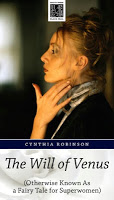
The central character is Livia, a thirty-seven-year-old Manhattan chef. When the narrative opens, Livia has just received a letter from her sister, Danae, who lives in New Orleans with her husband, asking her to come down for her fortieth birthday (Livia will be making dinner). Danae has made some rather theatrical declarations in the past about just cutting her losses and getting out (i.e., committing suicide) if she isn’t happy by her fortieth birthday, and Livia has a sinking feeling that her sister—who she knows is not happy—might actually be serious about this.

Livia books a ticket to New Orleans and then turns to her friend, Éster, an aspiring santera, for some white magic to insure the success of her efforts to save her sister from herself. The trouble starts when Livia mixes these filters and herbs with another set of santería spells she has been using to keep the romantic side of her life under control.

It’s a bit of Flannery O’Connor meets Gabriel García Márquez – not that I am seriously comparing myself to those two literary giants, but in terms of there being a lot of Southern material (Livia and Danae grew up outside Baton Rouge, Louisiana), laced with a generous helping of magical realism.

How did you get your novel published? Tell us about your journey to publication.

This novel has followed a long and winding road. I wrote it a number of years ago. I was living in Manhattan at the time, and had some very near misses at getting an agent and believe that if I had persisted, I probably would have found one. When I moved out west to take up my first tenure-track teaching position, though, I dropped the ball on the fiction writing. As I mentioned above, there is enormous pressure on tenure-track faculty to publish in the academic realm, and when you combine that with all of the other duties attendant to a teaching position at a research university, it can be pretty overwhelming.

Recently, though, I was approached by Shoto Press—a friend of mine is involved with that group, and he had read Venus back when I first wrote it and loved it (see, another guy!). He asked if I would be interested in publishing digitally (Shoto is an all-digital operation) and I thought, why not? 

So at least this leg of the journey was very unorthodox. I think, though, that, for future projects, I am going to try to do it the old-fashioned way—I don’t really think the publishing world is ready to take digital-only operations seriously. It has been difficult for us to get the book reviewed, or to get promotional opportunities, for example, through B&N. Even though they accepted Venus for their Nook (and they don’t accept everything, so we were happy about that), we ran into a lot of walls with them when we wanted to do promotions, because we didn’t have a paper product. And I have to confess that I like the feel of a “real book” in my hands!  I do have a Kindle and I love it for travel and for the ease with which you can just stick it in your bag and take hundreds of books along with you that way, but for the next one, I want to go a more traditional route, which will be a great deal more difficult—I will need to find an agent, for starters.

Where do you find the inspiration for your stories?

I find that almost all of my stories germinate initially from bits and pieces of the past (and this includes not only things I have lived, but things that other people have told me they have lived). These bits and pieces may be events, dreams, conversations, or personalities, but they morph, almost immediately, into something other than the reality from which they proceed.

Given my knowledge of medieval material, you might expect that I would draw more on that, but thus far that hasn’t happened.  I have one thing begun that is set in 10th-century Spain, but I haven’t been able to decide whether it is a novella or a short story or a novel proper, and even though I like it well enough, it keeps getting displaced by other projects.  Maybe some day…

What is the most challenging part about being a writer? What is the most rewarding?

The most challenging part has got to be getting published, and as I outlined above, I am just now undertaking the journey toward ‘traditional’ publication. It might be a long one.

Most rewarding: when something comes together and you know it’s good; when someone whose opinion you value highly tells you it’s good; giving a reading and realizing that people are spellbound. Warning: these things don’t happen every day, and I have yet to have them all happen on the same day.

Why should people buy your book?

Well, first of all because it’s only 99 cents! A total bargain! Seriously, because I believe they will enjoy it. It has been read by everyone from a serious professor of English literature to two of my doctors to a couple of my students—men and women, of a variety of ages—and they have all loved it. You can kind of take it on whatever level you want to: there is some very funny stuff in there, so that it feels almost farcical at times, and yet there are serious and poetic moments as well. You can take the implicit social critique seriously if you so choose, or you can laugh at it, up to you.

Do you have any advice for aspiring authors?

I myself find that I need to be disciplined about writing every day, or almost every day. But then I am a very organized and schedule-oriented person (as my S.O. is fond of saying, “Routine is freedom”); others may find that too constrictive. I have a particular niche in the day that I have now trained myself (over the last several months, that is, since I have started writing again) to envision as “writing time.” It doesn’t happen every day, of course, but the goal is to have it happen every day. Sometimes I don’t feel particularly inspired (it’s sort of like scheduling sex, I guess – you aren’t always in the mood!), but I at least try to do some editing or re-writing, and I often find that I get a couple of decent paragraphs out of myself even when I didn’t think I was in the right frame of mind.

Having a few of friends who are willing to read your stuff and give you honest, unvarnished feedback is invaluable. I have one friend with whom I swap critiquing services and his comments are always incredibly useful. I would like to start a fiction workshop, but my efforts thus far haven’t really gelled. I think you need at least three participants, and everyone needs to be compatible—not an easy thing to put together, as I am discovering.

Finally, being persistent and thick-skinned (all the while remaining open to constructive criticism!) are probably not bad qualities to cultivate.

What are you working on now?

Right now I am in the middle of writing a novel based on the murder of a young woman that happened in my town while I was growing up. I want to use that platform not in order to construct a classic who-dun-it, but rather to consider the effects the discovery of the body and the ensuing investigation have on a smallish university town in upstate New York (I have moved the setting from my childhood home to a place that looks and feels very much like where I live now). A number of current issues are weaving themselves into the narrative, such as the foster care of adolescents, difficult family relationships, and adolescent access to technological tools that they don’t always use with a great deal of wisdom. As I said above, three of the principal characters are men, which is new for me, and it is thus far a pretty exciting ride.
--

Thanks for answering our questions, Cynthia!
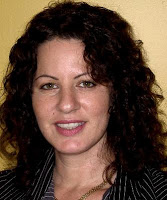
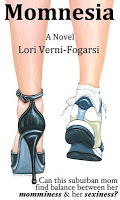
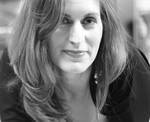
Meet the Author: Lori Verni-Fogarsi

Lori Verni-Fogarsi has been a freelance writer, journalist, columnist, and seminar speaker for more than fifteen years. Momnesia is her first novel, and she is also the author of the nonfiction book Everything You Need to Know About House Training Puppies and Adult Dogs.

When did you start writing professionally?

My professional career in writing started off in an unusual way! In 1993, I opened my first business--a dog training school. I decided to start a monthly newsletter to send to clients, vets, groomers, etc. I was pleasantly surprised when shortly after, magazines started contacting me for writing assignments. At first, I was asked to write only about dog behavior, but then things progressed to include small business marketing, parenting, and eventually fiction, as people enjoyed my "writing voice" that was evident, even in my nonfiction work. 


My career has progressed over the years to include working as a journalist and newspaper columnist, seminar speaker, small business consultant, and more! My first book, Everything You Need to Know About House Training Puppies and Adult Dogs, was published in 2005.

Why do you write women's fiction?

There are so many life issues that are specific to women; many of which we tend to feel "alone" about. I think there is incredible pressure on women (some of which we put on ourselves), to be "perfect." Perfect mothers, perfect career women, perfect runners of our households, perfect daughters, wives, neighbors, etc. One of the things I personally enjoy when I read women's fiction is the sense of being understood; not feeling like I'm the only one who feels a certain way.

My goal in writing women's fiction is to put a humorous, yet realistic and heartfelt twist on the issues we face. I enjoy putting emotions into words about things most of us barely dare think, even in the privacy of our minds! Presenting it with a certain level of candid humor helps bring even the more dire emotions into perspective. 


How did you get your novel published? Tell us about your journey to publication.

I began by following the traditional route: querying agents. I received a lot of great feedback including many requests for the full manuscript, and numerous heartfelt personal letters from top agents saying that I had strong writing and they loved my novel, but due to changes in the industry they simply couldn't take on another project. Even their referrals to other agents yielded the same results.

After a long and frustrating year of querying, I was reading an article in Writer's Digest Magazine. It was called something like "50 Things Authors Must Do For Their Book to Be Successful." It included obvious things like social networking and blog posting, but also included things like personally phoning and visiting bookstores to try and get events scheduled, booking and paying for your own travel, advertising in trade publications, etc. I remember feeling shocked, and saying to myself, "Remind me again... why would I pay an agent and a publisher to produce my book and receive lower per-book royalties if I still have to do and pay all this?"

Having been self-employed my entire life and having a strong business marketing background, I realized that perhaps going the traditional route wasn't right for me, considering the new way the industry works. However, I didn't want to self-publish, as there is a sea of self-published authors out there whose work is not professionally edited, and I didn't want to be a part of that crowd either.

My solution? I opened my own publishing company, Brickstone Publishing. I set up the entire business correctly as a professional micro-press, hired a professional editor to edit Momnesia, commissioned an artist to custom-paint the cover art, and hired a professional graphic designer to make the rest of the cover perfect. Meanwhile, I studied the publishing industry and learned all I needed to know to execute a professional book launch, from ISBN to ARCs and beyond.

Where do you find the inspiration for your stories?


Generally, they come from wildly embellished versions of my own experiences, or those of my friends. I also work from imagination: What would it be like if such-and-such happened? For example, my next novel is about a couple of almost-empty-nesters. Their combined family of four kids are just about all off to college and they've just ordered new, white furniture when a pregnant teenage girl shows up on their doorstep and announces she's the daughter they never knew they had! (There is a first chapter preview of my next book at the end of Momnesia!)

What is the most challenging part about being a writer? What is the most rewarding?

Without question there are two things I find the most challenging. One is the revising of the manuscript. Definitely not what I consider the fun part of being a writer, but certainly one I understand is necessary in order to turn out top work. The other? Not worrying about the fact that people assume everything they read in my books is a thinly veiled accounting of my own personal life!

The most rewarding is when people--actual strangers!--buy my book and love it. It's one thing for your mother or best friend to read your book and love it, but receiving five star reviews from total strangers? It's a charge to say the least!

Why should people buy your book?


My hope is for readers to buy my book for the same reasons I buy books: Because you enjoy escaping into some other person's world for a time. Because you want to laugh, cry, feel understood, feel better or worse about your own life. To FEEL, I guess, in general.

Do you have any advice for aspiring authors?

Yes. Three main things. 1) Just write your book. Don't worry about what you're going to do with it later; it can never be published if you still haven't written it! 2) Make sure it's professionally edited. Even though I've actually worked as an editor and proofreader on other people's work, I still had a professional, impartial editor go over my book, and it's important! 3) Be patient: If your goal is to have your book be successful, don't expect it to be a project that takes only a few months.

--

Thanks for answering our questions, Lori! 
--

To be entered to win a copy of Momnesia, please leave a comment. The winner will be randomly chosen on March 29th.

Meet the Author: Caroline Burau

When did you start writing professionally?

I started writing for newspapers as a columnist and reporter in 1999. I loved the writing, but didn’t always love the fact-finding – the times when I had to try to extract information from people who didn’t necessarily want to talk to me.

In 2003, I became a 911 dispatcher for a county sheriff’s department and began writing about my job, which is how my memoir Answering 911: Life in the Hot Seat came about.

Why do you write women's fiction?

Sugarfiend
started out as literary fiction, but slowly became “chick lit” because I realized I had a lot to say about the diet and fitness industry and that I wanted to say it in a way that wasn’t preachy, but humorous. I started my first diet when I was ten, so I’ve been obsessing about this topic for kind of a long time.

What is your novel Sugarfiend about?


Sugarfiend
is about a 25-year-old sugar addict named Estelle who reaches her rock-bottom on the diet/binge roller-coaster, quits her job, and goes on an all-you-can-eat Caribbean cruise. But Estelle is shocked – and mad as heck – when she find as many fitness classes and diet seminars as there are pasta bars and chocolate buffets on what’s supposed to be her vacation from it all.

Fueled by a few too many vodka-soaked smoothies, Estelle throws moderation overboard, and it lands her in huge debt. Broke and alone, she’s forced to take a job to pay it all back – as a fitness consultant on the ship. Hilarity, skullduggery, and even some nudity ensue. Huzzah!

Why did you choose to self-publish your novel?

It was surprisingly easy to find a publisher for my first book, Answering 911, because it was a memoir about a profession that hasn’t been written about much, if at all. I had hoped my success in non-fiction could help with Sugarfiend, but novels are more difficult because there are so many and they are more of a risk for the publisher.

After querying more than twenty agents about Sugarfiend, I decided to self-publish, knowing that without a publisher behind me, I would probably sell fewer copies than my first book, but eager to get it out into the world. Writers often say nothing is ever truly finished, just published. After several thorough edits, I knew Sugarfiend was good and I was ready to be “finished.”

Where do you find the inspiration for your stories?

I find inspiration in the absurd and in issues that affect me as a woman, and there seems to be no shortage of either.

What is the most challenging part about being a writer? What is the most rewarding?

Marketing my books and public speaking make me queasy, but are necessary evils when promoting a book, especially when you self publish.

It’s so rewarding when someone tells me I’ve written something they can relate to or that just made them laugh. A friend recently told me she was laughing too loudly while reading my book on the treadmill at the health club, which is both awesome and ironic.

Why should people buy your book?

If you’ve ever argued out loud with a baked good or a Pilates DVD, Estelle’s adventures will make you giggle. Also, I’ve recently discovered vintage dress shopping online, and it makes crack addiction look downright sensible.

Do you have any advice for aspiring authors?

Writing doesn’t always feel magical, but just keep at it because not writing becomes a hard habit to break. And then when you have something written, be willing to edit the hell out of it. It’s not about getting it perfect on the first try.

When you decide what to write, do some research to make sure the market is not already saturated with similar books. Think of what makes your book unique, or it will be hard to sell. Still, don’t write about anything that you’re not passionate about. Most authors don’t make their living at this. You should love your book just for the sake of it. Just the existence of it should make you want to squeal with glee.

What are you working on now?


Most recently, I’ve been writing weekly blogs for
www.women.com, which is keeping my writing chops up and bringing me new readers for both books.

In long-term projects, I have started a new novel about a 911 dispatcher with a sixth sense. I am also interested in researching and writing a true-crime book about a local abduction case, which would be a complete departure from anything I’ve done.
 
--

Thanks for answering our questions, Caroline!

Book Review: Favorable Conditions

Nancy’s Review of Favorable Conditions by Kathleen Kole

*This review is part of Kathleen Kole's blog tour hosted by CLP Blog Tours.

 
In her mid-forties, Pat Keegan gets divorced and both of her children are away at college. Realizing that this is her chance to start over, Pat sets out to figure out what she wants out of life. She decides to buy a used bookstore, a new business venture that she never expected to pursue before, but she enjoys it right away. Pat is reluctant to start dating, but when she meets handsome, charming, and much younger Ian, she reconsiders. With the encouragement of her best friend, Melanie, and her other friends, she decides to give the relationship a chance. But the near decade age difference and another woman who is also pursuing Ian could put a damper on their budding romance. Throw her daughter’s upcoming wedding into the mix and Pat has more to juggle than she could have imagined. With new dreams and goals set, Pat must forge a different path in life, and figure out who she is again.

Favorable Conditions is a novel about midlife self-discovery with entertaining, quirky characters. There is a good balance of humor and romance as the story unfolds. The writing flows well with natural dialogue that makes the characters seem very real. It is fun to go along for the ride as Pat has new, exciting experiences and changes her outlook on life. Melanie is a well-written best friend character who is very supportive of Pat and is always there for her. Readers will definitely root for Pat's relationship with Ian, who is an ideal love interest: sweet, endearing, and sincere. Favorable Conditions is an amusing tale of second chances and living life to the fullest. 


Kathleen Kole was born in Edmonton AB and graduated from college with a diploma in radio and television arts. She has written in the fields of advertising, television and newspaper. Kathleen relocated from Edmonton to Kelowna BC and resides there with her husband, son and dog. She is an independent author of three novels, Breaking Even, Dollars to Donuts and Favorable Conditions. Kathleen’s next two novels, Tales from the Laundry Pile and In This Moment, will be released later this year. To learn more, please visit her website, Facebook, and Twitter
--
To read Nancy’s review of Kathleen’s debut novel, Breaking Even, please click here.
To read Nancy’s review of Kathleen’s second novel, Dollars to Donuts, please click here.

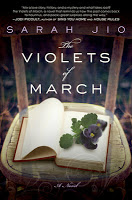
Book Club: Discussion of The Violets of March by Sarah Jio

Welcome to our first book club discussion! Please take a look at the discussion questions below and Nancy's responses, then comment with your own responses to some or all of the questions. Also, please include the number of the question(s) with your response(s) so we can all keep track of what is being discussed. Feel free to add any other comments you have that are not prompted by the questions. Thank you for reading The Violets of March and participating in our discussion!

The Violets of March Discussion Questions
 

1. How would you describe Emily Wilson’s life and her state of mind at the beginning of the book? What draws you to her character?

Emily’s marriage to Joel is ending when the novel begins. She wrote a bestselling novel eight years ago, but hasn’t written anything since. She describes her life as “vanilla,” too boring to inspire her writing. Emily is lost, but her friend Annabelle encourages her to take a trip to clear her head. So, Emily decides to go to Bainbridge Island to visit her great aunt Bee.
 
2. What are your first impressions of Bee? How would you describe Emily and Bee's relationship?

Bee seems like fun, but mysterious, too. She picks and chooses what she will talk to Emily about, which is frustrating. It’s clear that she’s guarded, obviously hiding something.
 
3. What role does Bainbridge Island play in this story? What makes it unique? 
 
Bainbridge Island is much more relaxed than New York where Emily lives. Bainbridge is a place of nostalgia for Emily because she spent time there when she was younger. Revisiting it as an adult is kind of like going back to summer camp with a new perspective. It houses Emily’s family’s secrets.
 
4. How have secrets affected Emily's family and personal relationships? Would you have tried to uncover the truth as well?

The secrets have created distance among her family members. It’s hard to resist trying to solve a mystery. Emily did the right thing by seeking the truth.
 
5. Emily finds two love interests on Bainbridge Island: Greg and Jack. What are your impressions of each of these men?

Greg is a great guy who is honest and sincere. I was rooting for Greg and liked him better than Jack. I was holding out hope for Emily to choose Greg until the very end. I wish Greg’s message about Emily in Heart Rock had more significance like it did for Esther and Elliot. I didn’t like Jack’s secrecy, which made him seem distant. Also, maybe Bee’s dislike for him influenced my opinion of him because I was waiting to see why she was warning Emily against him.
 
6. Emily thinks to herself, “What power Esther had over all of them.” What power did Esther have over Elliot, Evelyn, Bee, Janice, and Henry? What power did her story have over Emily?

Esther manipulated all of them, and her stubbornness deeply affected their lives. If she had told them she was still alive much sooner it would have alleviated some of their guilt. By faking her own death, Esther acted stupidly. None of them were brave, just stubborn. The good part about Esther’s story is that it opened Emily’s eyes so that she could help her family and find love.
 
7. Both Bee and Elliot harbor guilt about the night of Esther's accident. How do you feel they handled the situation?

They were cowards for running away, and as a result, they were haunted by that night for the rest of their lives.
 
8. Elliot says that he and Esther were “soul mates,” and Emily's relationship with Jack mirrors that sentiment. What role does timing play in these two couples' relationships? What could Esther and Elliot have done differently to be together?

Esther is to blame for the demise of her relationship with Elliot. If she had just let him explain why he was in Seattle with another woman, their story could have had a different ending. After she saw Elliot with Bee, she set out to punish him. Esther was spiteful, revengeful, and unfair, especially to keep Elliot’s daughter from him. At least Emily’s relationship with Jack is much healthier. Emily’s and Esther’s stories are supposed to be somewhat parallel, but they are ultimately very different characters. For example, Emily initially wanted to give Joel a second chance even after he cheated, but when Esther suspected cheating she took off running without even allowing for an explanation.
 
9. Would you recommend The Violets of March? Share what you liked the most about this novel.  

Yes. I really enjoyed the connection to the forties and the uncovering of the past through Esther’s diary. The setting was very inviting and the violets tied in nicely with the story. Overall, a superbly written novel. 

--

One lucky book club participant will receive a paperback copy of Sarah Jio's second novel, The Bungalow. The winner will be chosen at random from the comments on April 12th.